
Tags: Artemis Accords, NASA, space
- Dit onderwerp bevat 0 reacties, 1 deelnemer, en is laatst geüpdatet op 4 juli 2021 at 14:26 door Anna.
-
AuteurBerichten
-
-
4 juli 2021 om 14:26 #5307Anna@akrasko97
Het schijnt al iets van mei-oktober 2020 te zijn, maar het komt nu pas (bij mij) in beeld) – Artemis Accords. Het is een soort van upgrade van International Space Law uit de jaren 70x. Nu gelanceerd onder de vlag van NASA met het oog op grote uitbreidingen van activiteiten van landen met ruimte-programma’s op de Maan, op Maars en verder.
De doelen, die in dit verdrag staan (ondertekend door 8 landen, maar niet door China en Rusland) klinken best goed – transparantie, openheid van wetenschappelijk onderzoek, hulp bij noodsituaties. Maar vele landen spreken uit, dat het te veel gefocust zou zijn op belangen van de VS zelf. Hieronder meer over dit verdrag (interessante naam en logo), wel in het Engels.
================================
NASA
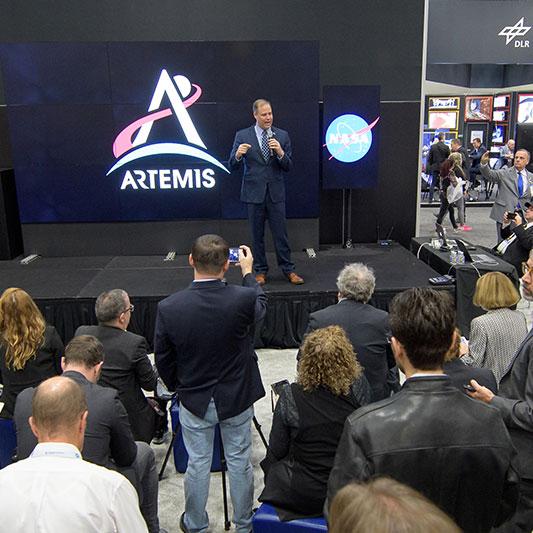
“This is the beginning of, I think, what is going to be an amazing opportunity to explore the moon and go on to Mars with the broadest, most diverse coalition in the history of humankind,” NASA Administrator Jim Bridenstine told reporters in a briefing on the announcement.
“We’re establishing what the rules and the norms of behavior are as we do this, so that we can preserve space and make sure that when we do explore, we’re doing it with peaceful purposes, we’re doing it with transparency and clarity to avoid any kind of misperceptions and any kind of conflict.”
The Artemis program, as NASA has laid out in a $28 billion proposal, would launch an uncrewed mission around the moon in 2021, followed by a crewed moon flyby in 2023, then a lunar landing in 2024.
Then NASA plans to build a permanent moon-orbiting base called the Gateway, similar to the International Space Station that orbits Earth. From there, the agency hopes to build a base on the lunar surface, where it can mine the resources required to fly the first astronauts to Mars.
With the Artemis Accords, NASA hopes to ensure that none of these partners ruin space for everyone else. The agreement builds on the Outer Space Treaty of 1967, translating its ideas into the new era of space exploration.
“If you want to join the Artemis journey, nations must abide by the Outer Space Treaty and other norms of behavior that will lead to a more peaceful, safe, and prosperous future in space exploration — not just for NASA and its partners, but for all of humanity to enjoy,” Mike Gold, acting associate administrator for NASA’s Office of International and Interagency Relations, said in the briefing. ….
Bridenstine promised the accords would onboard new countries in the near future. But for now, two major spacefaring nations — China and Russia — are notably absent from this new coalition.
Principles for deep-space exploration
The new accords detail 10 main principles which signatories agree to follow:Peace. Cooperative activities under the Artemis Accords should be “exclusively for peaceful purposes.”
Transparency. Participating nations should share their policies and plans for space exploration, as well as any scientific information they obtain from activities under the accords.
Interoperability. Space-based infrastructure should be designed so that everybody can integrate their technology to fit it — like an “iPhone for space,” where anybody can design an app or hardware that easily plugs in, Bridenstine said.
Emergency assistance. Participating nations agree to help astronauts in distress.
Registration of space objects. New spacecraft under the accords should be registered
Release of scientific data. Participating nations should share scientific data obtained during activities under the accords with the public and the international scientific community.
Preserving outer space heritage. Participants should preserve historically significant landing sites, spacecraft, and other artifacts.
Space resources. Participants should extract and use space resources (like water on the moon or minerals on asteroids) safely and sustainably. Further, mining on a celestial body (like the moon) does not mean you own that body.
Deconfliction of space activities. Participants should avoid harming or interfering with each other’s use of outer space, and they should establish “safety zones” for activities that could be harmful.
Orbital debris. Participants should avoid creating new debris in orbit by disposing of defunct spacecraft and avoiding collisions or spacecraft otherwise breaking apart.
The document is available in full on NASA’s website. https://www.nasa.gov/specials/artemis-accords/index.htmlThough private companies will not sign onto the Artemis Accords, Bridenstine said, they will be beholden to the agreement if their governments sign on.
===============================================
Criticism
The Accords have also been criticized for allegedly being too centered on American and commercial interests. Russia has condemned them as a blatant attempt to create international space law that favors the United States.[29] Two researchers writing in Science magazine’s Policy Forum have called on countries to speak up about their objections, and argued that the United States should go through the United Nations treaty process in order to negotiate on space mining. They were concerned NASA’s bilateral agreements, if accepted by many nations, would enable the Accords’ interpretation of the Outer Space Treaty to prevail, effectively making the U.S.—as the licensing nation for most of commercial space companies—the de facto gatekeeper to the Moon and other bodies in the solar system.[29] Acceptance of the Artemis Accords is a prerequisite for participation in NASA’s Artemis lunar program.[29]Critics also contend that since the Outer Space Treaty expressly forbids nations from staking claim to another planetary body, the Accords violate space law by allowing signatories to lay claim to any resources extracted from celestial objects.[30] Frans von der Dunk of the University of Nebraska-Lincoln claims the Accords strengthen “the US interpretation of the Outer Space Treaty”, namely “the basic right for individual States to allow the private sector to become engaged” in commercial activities. The weakened alternative interpretation is that “unilateral approval of commercial exploitation is not in compliance with the Outer Space Treaty, and that only an international regime, notably—presumably—including an international licencing system, could legitimise such commercial exploitation.” (From Wikipedia https://en.wikipedia.org/wiki/Artemis_Accords)
-
-
AuteurBerichten
- Je moet ingelogd zijn om een antwoord op dit onderwerp te kunnen geven.