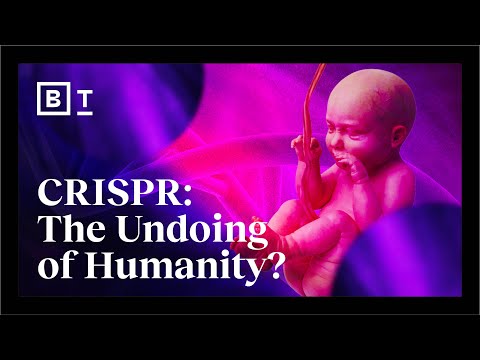
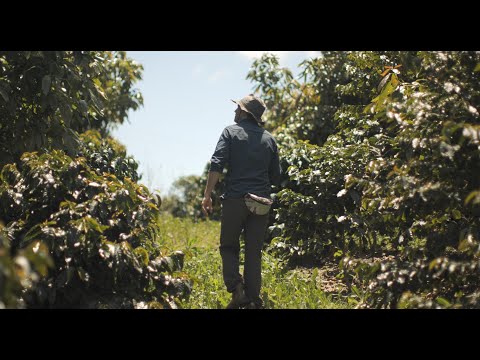
De wetenschappelijke doorbraak CRISPR zorgt ervoor dat we in staat zijn genetisch te manipuleren. Maar wat betekent dit voor menselijke evolutie en voor onze relatie met de natuur?
PBS Nova Human Nature / Gene-Editing Reality Check (1:33:41)
Deze nieuwe kennis heeft ons een ongekende controle gegeven over de basisbouwstenen van het leven. Het opent de deur naar het genezen van ziekten, het hervormen van de biosfeer en het ontwerpen van onze eigen kinderen. Wetenschappers stellen direct ook veel kritische vragen bij CRISPR.
(fragment uit het boek “Lame Deer — Seeker of Visions”)
Wat zie je hier, mijn vriend? Gewoon een doorsnee oude kookpot, zwart met roet en vol deuken.
Het staat op het vuur bovenop die oude houtkachel, en het water borrelt en beweegt het deksel terwijl de witte stoom naar het plafond stijgt. In de pot is kokend water, stukjes vlees met bot en vet, veel aardappelen.
Het lijkt geen boodschap te hebben, die oude pot, en ik denk dat je er niet over nadenkt. Behalve dat de soep lekker ruikt en je eraan herinnert dat je honger hebt. Misschien ben je bang dat dit hondenstoofpot is. Maak je geen zorgen. Het is gewoon rundvlees – geen dikke puppy voor een speciale ceremonie. Het is gewoon een alledaagse maaltijd.
Maar ik ben een indiaan. Ik denk aan gewone, doorsnee dingen zoals deze pot. Het borrelende water komt uit de regenwolk. Het vertegenwoordigt de hemel. Het vuur komt van de zon die ons allemaal verwarmt: mensen, dieren, bomen. Het vlees staat voor de vierpotige wezens, onze dierenbroeders, die zichzelf gaven zodat wij zouden leven. De stoom is levende adem. Het was water; nu gaat het naar de hemel, wordt weer een wolk. Deze dingen zijn heilig.
Kijkend naar die pot vol goede soep, bedenk ik hoe, op deze eenvoudige manier, Wakan Tanka (De Grote Geest) voor mij zorgt. Wij, Sioux, besteden veel tijd aan het nadenken over alledaagse dingen, die in onze geest vermengd zijn met het spirituele. We zien in de wereld om ons heen veel symbolen die ons de zin van het leven leren. We hebben een gezegde dat de blanke man zo weinig ziet, hij moet maar met één oog kijken. We zien veel dat u niet meer opmerkt. Je zou het kunnen merken als je zou willen, maar je hebt het meestal te druk. Wij Indianen leven in een wereld van symbolen en beelden waar het spirituele en het alledaagse één zijn.
Voor jou zijn symbolen slechts woorden, gesproken of geschreven in een boek. Voor ons maken ze deel uit van de natuur, een deel van onszelf — de aarde, de zon, de wind en de regen, stenen, bomen, dieren, zelfs kleine insecten zoals mieren en sprinkhanen. We proberen ze niet met het hoofd maar met het hart te begrijpen, en we hebben niet meer dan een hint nodig om de betekenis te vinden.
Wat voor ons alledaags lijkt, lijkt wonderbaarlijk door symboliek. Dit is grappig, want we hebben niet eens een woord voor symboliek, maar toch zijn we er allemaal in verwikkeld. Je hebt het woord, maar dat is alles.
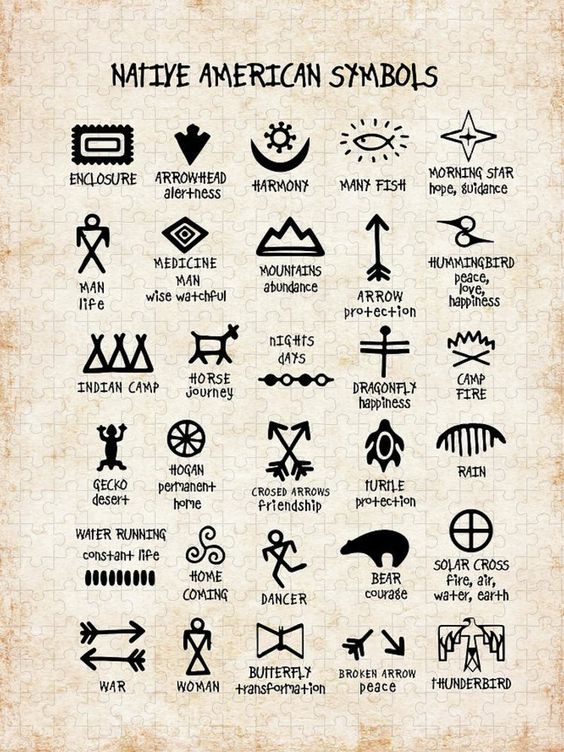
Kijk naar deze riem. Mijn oma heeft het gemaakt. Je zegt dat het mooi is en dat maakt me blij, want ik wil het je geven. Maar het is meer dan alleen mooi; het vertelt een verhaal. Alles wat je ziet is een geometrisch patroon van kralen – lijnen, driehoeken en diamantvormen – maar dit is een verhaal van de daden van mijn grootvader. Deze diamantvorm ♦ vertegenwoordigt een veer die aan een krijger wordt gegeven om te dragen na een dappere daad zoals het uitdagen van een vijand (“counting coup”). Deze rechthoeken met een ontbrekende lijn vertegenwoordigen de sporen van paarden. Ze staan voor de pony’s die van de vijand zijn gevangen. Deze vorm betekent dat een paard is gesneuveld in de strijd en dat zijn berijder is gered door mijn grootvader. Deze twee driehoeken zijn pijlen die op de vijand zijn geschoten. Deze riem vertelt over een gevecht.
Een vrouw zou een ander soort riem kunnen maken, waarmee ze haar liefde voor de natuur uitdrukt. Deze lijnen zijn het pad dat ze liep. Dit zijn bladeren waar ze tegenaan veegde. Dit is een mooie vlinder die op haar schouder rust. Deze op en neer trappen zijn een verre berg. Dit zijn wolken, en deze drie vormen zijn de wervelwind…
Deze riem vertelt ons over een jonge vrouw die een wandeling maakt, een storm tegenkomt, nat wordt, zich naar huis haast, waar ze deze riem gaat maken. Natuurlijk kan een meisje een riem maken voor haar geliefde met allerlei geheime hart-tot-hart dingen erin. Hij zou het begrijpen. <…>
Volgens onze manier van denken is het symbool van de Indianen de cirkel, de hoepel. De natuur wil dat alles rond is. De lichamen van mensen en dieren hebben geen hoeken. Bij ons staat de cirkel voor het samenzijn van mensen die met elkaar rond het kampvuur zitten, familieleden en vrienden in vrede verenigd terwijl de pijp van hand tot hand gaat. Het kamp waarin elke tipi zijn plaats had, was ook een ring. De tipi was een ring waarin mensen in een cirkel zaten en alle families in het dorp waren op hun beurt cirkels binnen een grotere cirkel, onderdeel van de grotere hoepel die de zeven kampvuren van de Sioux waren, die één natie vertegenwoordigden. De natie was slechts een deel van het universum, op zichzelf cirkelvormig en gemaakt van de aarde, die rond is, van de zon, die rond is, van de sterren, die rond zijn. De maan, de horizon, de regenboog – cirkels binnen cirkels binnen cirkels, zonder begin en zonder einde.
Voor ons is dit mooi en passend, symbool en realiteit tegelijk, het uitdrukken van de harmonie van leven en natuur. Onze cirkel is tijdloos, vloeiend; het is nieuw leven dat voortkomt uit de dood – het leven wint het van de dood. <…>
The Circle and the Square
(Extract from a book “Lame Deer—Seeker of Visions”)
What do you see here, my friend? Just an ordinary old cooking pot, black with soot and full of dents.
It is standing on the fire on top of that old wood stove, and the water bubbles and moves the lid as the white steam rises to the ceiling. Inside the pot is boiling water, chunks of meat with bone and fat, plenty of potatoes.
It doesn’t seem to have a message, that old pot, and I guess you don’t give it a thought. Except the soup smells good and reminds you that you are hungry. Maybe you are worried that this is dog stew. Well, don’t worry. It’s just beef—no fat puppy for a special ceremony. It’s just an ordinary, everyday meal.
But I’m an Indian. I think about ordinary, common things like this pot. The bubbling water comes from the rain cloud. It represents the sky. The fire comes from the sun which warms us all— men, animals, trees. The meat stands for the four-legged creatures, our animal brothers, who gave of themselves so that we should live. The steam is living breath. It was water; now it goes up to the sky, becomes a cloud again. These things are sacred.
Looking at that pot full of good soup, I am thinking how, in this simple manner, Wakan Tanka takes care of me. We Sioux spend a lot of time thinking about everyday things, which in our mind are mixed up with the spiritual. We see in the world around us many symbols that teach us the meaning of life. We have a saying that the white man sees so little, he must see with only one eye. We see a lot that you no longer notice. You could notice if you wanted to, but you are usually too busy. We Indians live in a world of symbols and images where the spiritual and the commonplace are one.
To you symbols are just words, spoken or written in a book. To us they are part of nature, part of ourselves —the earth, the sun, the wind and the rain, stones, trees, animals, even little insects like ants and grasshoppers. We try to understand them not with the head but with the heart, and we need no more than a hint to give us the meaning.
What to you seems commonplace to us appears wondrous through symbolism. This is funny, because we don’t even have a word for symbolism, yet we are all wrapped up in it. You have the word, but that is all.
Look at this belt. My grandmother made it. You say it is beautiful and this makes me glad, because I want to give it to you. But it is more than just beautiful; it tells a story. All you see is a geometric pattern of beads—lines, triangles and diamond shapes—but these are a tale of my grandfather’s deeds. This diamond shape ♦ represents a feather given to a warrior to wear after doing a brave thing like counting coup. These rectangles with one line missing represent horses’ tracks. They stand for the ponies captured from the enemy. This shape means a horse killed in battle and its rider rescued by my grandfather. These two triangles are arrows shot at the enemy. This belt tells of a battle.
A woman could make a different kind of belt, expressing her love of nature. These lines are the trail she walked. These are leaves she brushed against. This is a pretty butterfly resting on her shoulder. These up-and-down steps are a distant mountain. These are clouds, and these three shapes are the whirlwind…
This belt tells us about a young woman taking a walk, running into a storm, getting wet, hurrying home, where she gets down to making this belt. Of course, a girl could make a belt for her lover with all kinds of secret heart-to-heart things put in it. He would understand. <…>
To our way of thinking the Indians’ symbol is the circle, the hoop. Nature wants things to be round. The bodies of human beings and animals have no corners. With us the circle stands for the togetherness of people who sit with one another around the campfire, relatives and friends united in peace while the pipe passes from hand to hand. The camp in which every tipi had its place was also a ring. The tipi was a ring in which people sat in a circle and all the families in the village were in turn circles within a larger circle, part of the larger hoop which was the seven campfires of the Sioux, representing one nation. The nation was only a part of the universe, in itself circular and made of the earth, which is round, of the sun, which is round, of the stars, which are round. The moon, the horizon, the rainbow—circles within circles within circles, with no beginning and no end.
To us this is beautiful and fitting, symbol and reality at the same time, expressing the harmony of life and nature. Our circle is timeless, flowing; it is new life emerging from death—life winning out over death. <…>
From: “Lame Deer—Seeker of Visions”, The Circle and the Square
(door Paul Mulliner) We hebben misschien allemaal momenten
wanneer het lijkt
dat onder
het alledaagse,
het leven is meer
dan het lijkt,
en iets stils,
bewust, volhardend,
laat zich zien
als een liefde in onze ogen
dat heeft geen woorden nodig,
toch blijft er niets ongezegd.
Iets dat ons eraan herinnert
dat we kosmisch zijn,
het Heelal in menselijke vorm.
Iets universeels dat kosmische energie lijkt te organiseren, zodat het verschijnt als bomen, mensen en al het leven.
…
En hoewel we ons kunnen afstemmen op deze ruime intelligentie wanneer we maar willen, en het ons intuïtief door de moeilijke tijden kunnen laten leiden die in elk mensenleven opduiken, hebben we ons misschien nog niet gerealiseerd hoe gemakkelijk deze innerlijke afstemming eigenlijk is.
…
Hoe gemakkelijk kunnen we onze aandacht richten op de universele bewuste ruimte in ons in plaats van op onze gedachten, en de toegang tot intuïtie vinden die mensen, overal op de planeet en in de afgelopen eeuwen, altijd hebben gevonden.
…
image Paul Mulliner 2021
…
Afstemmen, zodat we altijd innerlijke rust en de begeleiding die we in de kosmische intelligentie kunnen vinden.
…
Maar eerst moeten we ons realiseren hoe cruciaal het is om precies te weten waar onze aandacht op is gericht.
Wanneer we lezen, is onze aandacht gericht op de woorden terwijl we ze lezen.
Maar we kunnen beginnen om onze gerichte aandacht bewust te richten waar we willen dat het naartoe gaat.
We kunnen het in onszelf verplaatsen.
We kunnen onze aandacht richten en naar binnen verplaatsen, naar onze innerlijke kern.
We kunnen onze aandacht richten op de bewuste ruimte in ons.
…
Door regelmatig de innerlijke bewuste ruimte te kennen, kunnen we de hints die vanuit onze intuïtie voortkomt beter horen.
En door deze begeleiding elke dag onze keuzes te laten bepalen, kunnen we beginnen ons leven te sturen.
We kunnen er soms voor kiezen om de intuïtieve begeleiding die in ons naar boven komt, te negeren of te overrulen.
Maar in een levenslang proces, met een innerlijke intuïtieve gids waar we altijd op afstemmen en die we hebben leren vertrouwen, kunnen we ons leven sturen en verstandig deelnemen met de kosmische intelligentie die al het leven in het Universum tot stand brengt.
…
Image: Paul Mulliner 2_9_21
…
De transformatie van kosmische energie en intelligentie in de clusters van energiefluctuaties die we waarnemen als onze eigen menselijke hand, vindt plaats in een vloeiende stroom van continue ontvouwen van het niet-zichtbare naar het zichtbare.
En dit is nu een manier om de wereld te zien die aannemelijker is dan het misschien een paar decennia geleden leek, voordat we uit de wetenschap wisten dat ons menselijk lichaam lang niet zo solide en materieel is als het eruit ziet.
…
Verbazingwekkend genoeg lijkt ons menselijk lichaam eigenlijk te bestaan uit trillingspatronen in een veld van kosmische energie, georganiseerd en bijeengehouden door een ruimtelijke intelligentie in het hele Universum.
Kosmische intelligentie lijkt voortdurend zichtbaar te worden omdat het kosmische energie omzet in de orkestratie van biochemie in biljoenen van onze eigen menselijke lichaamscellen.
…
En door ons meer gewaar te zijn van deze bewuste intelligente ruimte, door onze aandacht naar binnen te richten, voelen we ons meer thuis in de wereld en in ons Universum.
Terwijl het navigatie ervan onze keuzes in de wereld informeert en ons helpt de inspiratie te vinden om de dingen te veranderen die moeten veranderen, en laat denken dat ons niet helpt, los te laten.
…
En weet dat ondanks de eindeloze vergankelijkheid van al onze levenservaringen en het dagelijkse werk om het leven in de wereld bij elkaar te houden, is er altijd iets constants en duurzaams in ons dat ons kan inspireren en leiden.
Iets dat gekend wil worden terwijl zijn bewuste stilte ons hart inademt.
…
In ieder van ons wordt het Universum zich op een unieke manier bewust van zichzelf.
En op onze donkerste momenten is het er altijd in ons, het verdriet en de schoonheid van een mensenleven kennend.
Hoewel voorbijgaande momenten lijken geschreven in de wind
Something universal that seems to be organizing cosmic energy so it appears as trees, human beings and all life.
…
And though we can tune in to this spacious intelligence whenever we want, and allow it to intuitively guide us through the difficult times that crop up in every human life, we may not yet have realized how easy this inner tuning actually is.
…
How easily we can focus our attention in the universal conscious space inside us rather than on our thoughts, and find the access to intuition that human beings, everywhere on the planet and throughout past centuries, have always found.
…
image Paul Mulliner 2021
…
Tuning in, so we’re always able to find inner peace and the guidance available from cosmic intelligence.
…
But first we have to realize the crucial importance of knowing precisely where our attention is focused.
When we’re reading, our attention is focused on the words as we read them.
But we can begin to consciously direct our focused attention where we want it to go.
We can move it inside ourselves.
We can take our focus of attention and move it inward, into our inner core.
We can focus our attention on the conscious space inside us.
…
Regularly knowing the inner conscious space helps us more clearly hear the guidance emerging from our intuition.
And allowing this guidance to inform our choices every day, helps us begin to steer our life.
We might choose sometimes to ignore or override the intuitive guidance that emerges inside us.
But in a life-long process, with an inner intuitive guide we’re always tuning in to and have learned to trust, we can steer our life and participate wisely with the cosmic intelligence that’s bringing all life in the Universe into being.
…
Image: Paul Mulliner 2_9_21
…
The transforming of cosmic energy and intelligence into the clusters of energy fluctuations that we observe as our own human hand, is occurring in a streaming flow of continuous emergence from the non-visible into the visible.
And this is now a way of seeing the world that’s more plausible than it might have seemed a few decades ago, before we knew from science that our human body isn’t nearly as solid and material as it looks.
…
Astonishingly, our human body seems to actually consist of patterns of vibration in a field of cosmic energy, organized and held together by a spatial intelligence across the Universe.
Cosmic intelligence seems to be becoming continuously visible as it transforms cosmic energy into the orchestration of biochemistry inside trillions of our own human body cells.
And becoming more aware of this conscious intelligent space, by inwardly focusing our attention, helps us feel more at home in the world and in our Universe.
While its guidance informs our choices in the world, and helps us find the inspiration to change the things that need changing, and let go of thinking that isn’t helping us.
…
And know that despite the endless transience of all our experience of life
and the everyday work of keeping a life together in the world, there’s always something constant and enduring inside us that can inspire and guide us.
Something that wants to be known while its conscious silence breathes into our heart.
Within each one of us the Universe becomes conscious of itself in a unique way.
And in our darkest moments it’s always there inside us, knowing the sadness and the beauty of a human life.
And though passing moments seem written in the wind
(a chapter from the book “The Extraterrestrial Species Almanac” by Craig Campobasso)
Universal Origin: Ummites are from the planet Ummo, a one continent world with many large lakes. It is near Sagitta, a dim constellation in the northern sky.
Physical Characteristics: Ummites are indistinguishable from Earth humans and Nordic-appearing. Male and female heights range between eight and nine feet. They have a heightened sense of smell and are primarily nocturnal.
Belief System: Ummo’s globe is overseen by four people who have been chosen by the populace. There is no monetary system, as with all star nations. Society thrives through a joint effort and discipline. All carry out their duties knowing that if they fail to perform, others in their society will suffer. Their social structure is efficient and unified, using the principles of the One Spirit (the life generator), the glue that holds the physical worlds and its dimensions together.
Cosmic Agenda: In March of 1950, Ummite explorers came to Earth to learn about our cultures. They disseminated scientific information about our universe to selected individuals through letters, including leading scientists, to expand their thinking, to concentrate on planetary problems that required immediate attention. There were also codicils on technical information: technology safe for the environment and educational improvements for all of humanity. The Ummites visit Earth periodically to this day. They live by the Cosmic Law of One: that every world, its consciousness as a whole, is responsible for its demise or elevation. They shared their wealth of spiritual knowledge with us to help us climb out of the cesspool of wars, pollution, and social unrest. They hope we will heed their warnings and not destroy our race and planet.
Technology: Ummites have oval saucer-shaped craft. Their ships and world use biological supercomputers.
Consciousness Abilities: Ummites are fully conscious and sovereign beings. They are telepathic empaths. They say that all sentient beings are linked to Creation’s soul through man’s encephalic cortex.
Dimensional Capacity: The Ummites say the multiverse exists because pockets of reverse time and positioned matter exist in areas where the light velocity is faster. The electrical and magnetic fields and stationary electrical fields do not radiate out of reversed space time. Universes formed out of dark matter exist in reverse time. They invert the dark matter universe(s) to exist in our space time and travel through those corridors across the universe, cutting travel time to a minimum.
****** ******
Ummites
Universele oorsprong: Ummites komen van de planeet Ummo, een wereld op één continent met veel grote meren. Het bevindt zich in de buurt van Sagitta, een minder helder sterrenbeeld aan de noordelijke hemel.
Fysieke eigenschappen: Ummites zijn niet te onderscheiden van aardse mensen en zien er Scandinavisch uit. Mannelijke en vrouwelijke lengtes variëren tussen acht en negen voet. Ze hebben een verhoogd reukvermogen en zijn voornamelijk in de nachtelijke uren actief.
Overtuigingssysteem: Ummo’s wereld staat onder toezicht van vier mensen die door de bevolking zijn gekozen. Er is geen monetair systeem, zoals bij alle sterrennaties. De samenleving gedijt door een gezamenlijke inspanning en discipline. Allen voeren hun plichten uit in de wetenschap dat als ze niet presteren, anderen in hun samenleving zullen lijden. Hun sociale structuur is efficiënt en verenigd, gebruikmakend van de principes van de One Spirit, Ene Geest (de levensgenerator), de lijm die de fysieke werelden en haar dimensies bij elkaar houdt.
Kosmische Agenda: In maart 1950 kwamen Ummite-ontdekkingsreizigers naar de Aarde om meer te weten te komen over onze culturen. Ze verspreidden wetenschappelijke informatie over ons universum aan geselecteerde individuen door middel van brieven, waaronder vooraanstaande wetenschappers, om hun denken uit te breiden, om zich te concentreren op planetaire problemen die onmiddellijke aandacht vereisten. Er waren ook codicils over technische informatie: technologie die veilig is voor het milieu en educatieve verbeteringen voor de hele mensheid. De Ummites bezoeken de Aarde tot op de dag van vandaag regelmatig. Ze leven volgens de Kosmische Wet van Eén: dat elke wereld, zijn bewustzijn als geheel, verantwoordelijk is voor zijn ondergang of verheffing. Ze deelden hun schat aan spirituele kennis met ons om ons te helpen uit de beerput van oorlogen, vervuiling en sociale onrust te klimmen. Ze hopen dat we gehoor geven aan hun waarschuwingen en ons ras en onze planeet niet vernietigen.
Technologie: Ummites hebben ovale schotelvormige vaartuigen. Hun schepen en wereld gebruiken biologische supercomputers.
Bewustzijnsvaardigheden: Ummites zijn volledig bewuste en soevereine wezens. Het zijn telepathische empaten. Ze zeggen dat alle levende wezens verbonden zijn met de ziel van de Schepping via de hersenschors van de mens.
Dimensionale capaciteit: De Ummites zeggen dat het multiversum bestaat omdat er gebieden zijn met omgekeerde tijd en gepositioneerde materie in gebieden waar de lichtsnelheid hoger is. De elektrische en magnetische velden en stationaire elektrische velden stralen niet uit de omgekeerde ruimtetijd. Universums gevormd uit donkere materie bestaan in omgekeerde tijd. Ze keren het (de) donkere materie-universum(s) om om in onze ruimtetijd te bestaan en reizen door die gangen door het heelal, waardoor de reistijd tot een minimum wordt beperkt.
***** *****
Een interview van Dr. Michael Salla met Come Carpentier over Ummite contacten in Frankrijk en Spanje
Walking the Razor’s Edge between World Politics and Exopolitics
Come Carpentier became interested in UFOs and extraterrestrial life in the late 1960s when he learned about the mysterious Ummo case in France and Spain. Alleged extraterrestrials from the planet Ummo created an office in Spain where they began corresponding with scientists and UFOlogists from around the world introducing them to advanced physics and philosophies.
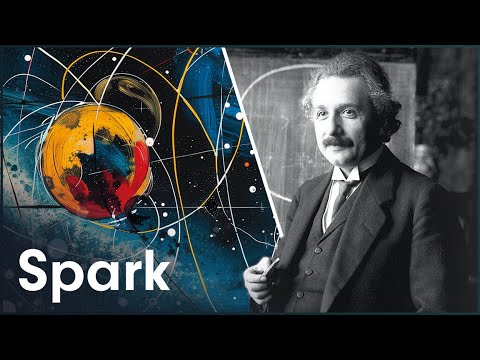
Professor Jim Al-Khalili schetst het verhaal van misschien wel de belangrijkste, nauwkeurige en toch verbijsterende wetenschappelijke theorie ooit: de kwantumfysica.
Het verhaal van de kwantumfysica begint aan het begin van de 20e eeuw met wetenschappers die proberen beter te begrijpen hoe gloeilampen werken. Deze eenvoudige vraag leidde wetenschappers al snel tot diep in de verborgen werking van materie, in de subatomaire bouwstenen van de wereld om ons heen. Hier ontdekten ze fenomenen zoals ze nog nooit eerder waren tegengekomen – een rijk waar dingen op veel plaatsen tegelijk kunnen zijn, waar toeval en waarschijnlijkheid de baas zijn en waar de realiteit alleen echt lijkt te bestaan als we ze observeren.
Albert Einstein had een hekel aan het idee dat de natuur, op het meest fundamentele niveau, door toeval wordt bestuurd. Jim onthult hoe Einstein in de jaren dertig dacht dat hij een fatale fout in de kwantumfysica had gevonden. Dit werd pas serieus genomen toen het in de jaren zestig werd getest. Professor Al-Khalili herhaalt dit kritische experiment, waarbij hij de vraag stelt of de werkelijkheid werkelijk bestaat, of toveren we haar tot bestaan door middel van observatie?
Elders onderzoeken we hoe planten en bomen zich houden aan de meest bekende wet van de kwantumfysica – het onzekerheidsprincipe – terwijl ze zonlicht opvangen tijdens het vitale proces van fotosynthese. Zou de kwantummechanica het grootste mysterie in de biologie kunnen verklaren – evolutie?
English: Professor Jim Al-Khalili traces the story of arguably the most important, accurate and yet perplexing scientific theory ever: quantum physics. The story of quantum physics starts at the beginning of the 20th century with scientists trying to better understand how light bulbs work.
This simple question soon led scientists deep into the hidden workings of matter, into the sub-atomic building blocks of the world around us. Here they discovered phenomena unlike any encountered before – a realm where things can be in many places at once, where chance and probability call the shots and where reality appears to only truly exist when we observe it.
Albert Einstein hated the idea that nature, at its most fundamental level, is governed by chance. Jim reveals how in the 1930’s, Einstein thought he’d found a fatal flaw in quantum physics. This was not taken seriously until it was tested in the 1960s. Professor Al-Khalili repeats this critical experiment, posing the question does reality really exist, or do we conjure it into existence by the act of observation?
Elsewhere, we explore how the most famous law of quantum physics – The Uncertainty Principle – is obeyed by plants and trees as they capture sunlight during the vital process of photosynthesis. Could quantum mechanics explain the greatest mystery in biology – evolution?
“Begin nu te doen wat je wilt doen. We leven niet in de eeuwigheid. We hebben alleen dit moment, fonkelend als een ster in onze hand – en smeltend als een sneeuwvlok…”― Sir Francis Bacon
Het lichaam wordt ouder. Maar bewustzijn is altijd in het huidige moment – Nisargadatta Maharaj
“We zien de dingen niet zoals ze zijn, we zien ze zoals wij zijn” – Anais Nin
…
Er kunnen momenten zijn waarop we plotseling met nieuwe ogen naar het leven kijken.
Momenten waarop het lijkt alsof het hele universum één enkele bewuste ruimte is, overal tegelijk bewust in zichzelf.
Alsof alles wat we in de wereld doen en elke keuze die we maken op de een of andere manier zinvol is, omdat alles gekend is.
…
We zijn allemaal verweven met universeel bewustzijn, hoewel dit nog niet helemaal een gangbare manier is om onze wereld te zien.
De evolutie van ons bewustzijn kan soms worden belemmerd door verouderde ideeën die we uit het verleden hebben geërfd en die helaas nog steeds wijdverbreid zijn in de media.
Deze mainstream-ideeën zorgen ervoor dat we leven met een mindset of wereldbeeld waarin we ons voorstellen dat we concurreren in plaats van samenwerken.
Ze kwamen voor het eerst massaal naar voren in de westerse verbeelding toen onze technologieën waren die van de vroege stoommachine en de eerste morsecodetelegraaf.
Ze stelden voor dat ons afzonderlijke menselijke brein op de een of andere manier bewustzijn genereert en dat al het leven betrokken is bij een “survival of the fittest”.
…
Ze kunnen nu worden gezien als beperkend en ontoereikend, behorend tot voorbije tijd.
Onze ideeën over de wereld en het heelal evolueren echter altijd, net als onze technologie.
…
Bewustzijn is ruimtelijk en universeel, een intrinsieke eigenschap of kwaliteit van de ruimte binnen en rondom al het leven.
En onze innerlijke kern doet mee met, en wordt geïnspireerd door, deze vloeiende universele intelligentie.
Het is de bron van onze intuïtie.
Het is niet-lokaal, alles wat overal bekend is, is overal tegelijk bekend en het verbindt ons allemaal met zichzelf door het hele Universum.
…
Door onze aandacht naar binnen te richten, af te stemmen op de innerlijke bewuste stilte en onze eigen intuïtieve verbinding met het universele bewustzijn te vinden, kunnen we de wereld anders zien en leren kennen.
En het is intuïtie die cruciaal is voor onze persoonlijke evolutie naar een dieper begrip van onze wereld, onszelf, ons bewustzijn en het Universum.
Intuïtie komt voort uit universeel bewustzijn als een plotselinge, spontane stroom van leidende intelligentie, een spontane flits van inspiratie.
Intuïtie is transformerend en inspireert ons om te evolueren, trekt ons aan om meer bewust te worden.
…
Het kennen van universeel bewustzijn betekent niet dat we ons unieke persoonlijke karakter, onze persoonlijkheid, verliezen.
Het persoonlijke zelf is een unieke ‘kleuring’ van het bewuste zelf in ons allemaal.
Een unieke smaakmaker van het universele bewustzijn dat overal in al het leven en in alle ruimte aanwezig is.
En ons unieke persoonlijke zelf is in staat om vrijer te stromen en creatiever te zijn omdat het zich niet langer ingedamd, beperkt, tegengehouden door scheiding van de wereld voelt.
Het hoeft niet langer haatdragend en boos denken te creëren.
…
We zijn verenigd in een heel bewust Universum, bewustzijn is niet beperkt tot de grens van ons afzonderlijke lichaam, het is universeel, in ons allemaal.
‘Ons eigen persoonlijke’ bewustzijn is een lokaal weten binnen een niet-lokale bewuste ruimte die ons allemaal omvat.
Als golven die zo eventjes verschijnen
in een eindeloze oceaan,
we zijn geweven door het Heelal,
en elke keuze wordt alles wat is
en alles wat we zijn,
en combineert op de een of andere manier alle ervaringen
in alles wat gebeurt.
…
En dit universeel bewustzijn bevindt zich in al het leven, orkestreert de biochemie van levende cellen en laat ons allemaal evolueren naar een dieper begrip van onszelf, als we er aandacht aan besteden.
…
En het gefluister van intuïtie dat we duidelijker horen met onze aandacht gericht in de stilte, inspireren ons om synchroon te leven met kosmische intelligentie.
Inspireren ons om meer om onze planeet te geven dan voorheen, en om voor elkaar te zorgen.
Het inspireert ons om te beseffen dat elk moment van ons kostbare menselijke leven ertoe doet.
Elk moment biedt een kans om het grotere zelf in ons allemaal te vinden, het zelf dat alle ruimte tussen de sterren raakt.
“Ik zou graag willen leven
Zoals een rivier stroomt,
Gedragen door de verrassing
Van zijn eigen ontplooiing “― John O’Donohue”
…
Kosmische intelligentie heeft een menselijke ervaring.
“Begin doing what you want to do now. We are not living in eternity. We have only this moment, sparkling like a star in our hand — and melting like a snowflake…”― Sir Francis Bacon
The body gets older. Yet consciousness is always in the present moment — Nisargadatta Maharaj
“We do not see things as they are, we see them as we are” — Anais Nin
…
There may be moments when we look at life suddenly with new eyes.
Moments when it seems as though the whole Universe were a single conscious space, aware everywhere all at once within itself.
As though everything we do in the world and every choice we make were somehow meaningful, because everything is known.
…
We’re all woven into universal consciousness, though this isn’t quite yet a mainstream way of seeing our world.
The evolution of our conscious awareness can sometimes be hindered by outdated ideas we inherit from the past that are unfortunately still widespread in the media.
These mainstream ideas keep us living with a mindset or worldview where we imagine ourselves to be in competition, rather than joined in cooperation.
They first emerged and entered the mainstream western imagination when our technologies were the early steam engine and the first morse code telegraph.
They proposed our separate human brain somehow generates consciousness and all life is involved in a survival of the fittest.
…
They can now be seen as limiting and inadequate, belonging to a previous time.
Our ideas about the world and the Universe are always evolving however, just like our technology does.
…
Consciousness is spatial and universal, an intrinsic attribute or quality of the space inside and around all life.
And our inner core participates with, and is inspired by, this fluid universal intelligence.
It’s the source of our intuition.
It’s nonlocal, everything known anywhere is known all at once everywhere, and it joins all of us into itself throughout the whole Universe.
…
Inwardly focusing our attention, tuning in to the inner conscious silence and finding our own intuitive connection into universal consciousness helps us see and know the world differently.
And it’s intuition that’s crucial to our personal evolution into a deeper understanding of our world, our self, consciousness and the Universe.
Intuition emerges from universal consciousness as a sudden flow of guiding intelligence, a spontaneous flash of inspiration.
Intuition is transformative, inspiring us to evolve, tugging us into becoming more aware.
…
Knowing universal consciousness doesn’t mean we lose our unique personal character, our personality.
The personal self is a unique ‘coloration’ of the conscious self in all of us.
A unique flavoring of the universal consciousness that’s within all life and all space everywhere.
And our unique personal self is able to flow more freely and be more creative because it no longer feels confined, restricted, held back by separation from the world.
It no longer needs to create resentful and angry thinking.
…
We’re joined into a whole conscious Universe, consciousness isn’t confined to the boundary of our separate body, it’s universal, inside all of us.
‘Our own personal’ conscious awareness is a local knowing within a nonlocal conscious space that includes all of us.
Like waves appearing for a moment
in an endless ocean,
we’re woven through the Universe,
and every choice becomes everything that is
and everything we are,
and blends somehow all experience
into all that comes to pass.
…
And this universal consciousness is inside all life, orchestrating the biochemistry of living cells, evolving all of us into a deeper understanding of itself, if we pay attention to it.
…
And the whispers of intuition we hear more clearly with our attention focused in the silence are inspiring us to live in sync with cosmic intelligence.
Inspiring us to care more about our planet than we have previously, and care for each other.
Inspiring us to realize that every moment of our precious human life matters.
Every moment brings an opportunity to find the larger self inside all of us, the self that touches all the space between the stars.
De naam van Erich Fromm komt me bekend voor en dan zie ik een artikel met fragmenten uit zijn boek over een kunst van liefhebben. Het gaat niet enkel over relaties, het gaat over brede menselijke roep om afgescheidenheid te overstijgen (“overcoming separateness”). Eerst staan hier citaten in het Nederlands, het fragment zelf is in het Engels.
“Er is bijna geen activiteit, geen onderneming, die gestart wordt met zo verschrikkelijk veel hoop en verwachtingen en die toch zo vaak mislukt, als de liefde.”
“Nauw verwant met deze factor is een tweede karakteristiek kenmerk van de hedendaagse samenleving. We leven in een cultuur van consumentisme, waar de voornaamste drijfveer van onze activiteit schijnt te bestaan uit het opwekken danwel bevredigen van kooplust, uit het verlangen een voor beide partijen gunstige ruil te doen.”
“Als een mens slechts één ander mens liefheeft en onverschillig is tegenover de rest van zijn medemensen, dan is zijn liefde geen liefde maar een symbiotische binding of een vernieuwd egoïsme.”
“Concentratie in de verhouding tot anderen betekent in de eerste plaats dat men kan luisteren.”
Over Erich Fromm
Duits-Amerikaans cultuurpsycholoog en filosoof. Een der belangrijkste vertegenwoordigers van de ‘Frankfurter Schule’. Vluchtte in 1934 uit Hitler-Duistland naar de VS waar hij aan vele universiteiten doceerde en directeur werd van het instituut voor psychoanalyse in Mexico-City. Hoofdthema in zijn werk is de dwingende invloed van de sociaal-culturele omgeving op de behoeften van het individu. In 1947 verscheen ‘Escape from Freedom’ en ‘Man for himself’. Later volgden ‘The sane society’ (1955) en ‘The anatomy of human destructiveness’ (1975). Fromm stelde de ziekmakende vervreemding van de mens in de moderne tijd aan de kaak en pleitte voor zelfontplooiing.
Love is not a sentiment which can be easily indulged in by anyone, regardless of the level of maturity reached by him. All his attempts for love are bound to fail, unless he tries most actively to develop his total personality, so as to achieve a productive orientation; that satisfaction in individual love cannot be attained without the capacity to love one’s neighbour, without true humility, courage, faith and discipline. In a culture in which these qualities are rare, the attainment of the capacity to love must remain a rare achievement. Or – anyone can ask himself how many TRULY loving persons he has known?
If two people who have been strangers, as all of us are, suddenly let the wall between them break down, and feel close, feel one, this moment of oneness is one of the most exhilarating, most exciting experiences in life.
It is all the more wonderful and miraculous for persons who have been shut off, isolated, without love. This miracle of sudden intimacy is often facilitated if it is combined with, or initiated by, sexual attraction and consummation. However, this type of love is by its very nature not lasting.
The two persons become well acquainted, their intimacy loses more and more of its miraculous character, until their antagonism, their disappointments, their mutual boredom kill whatever is left of the initial excitement. Yet, in the beginning they do not know all this: in fact, they take the intensity of the infatuation, this being “crazy” about each other, for proof of the intensity of their love, while it may only prove the degree of their preceding loneliness. There is hardly any activity, any enterprise, which is started with such tremendous hopes and expectations, and yet, which fails so regularly, as love. If this were the case with any other activity, people would be eager to know the reasons for the failure, and to learn how one could do better – or they would give up the activity.
The first thing we have to learn is that love is an art, just as living is an art; if we want to learn how to love we must proceed in the same way we have to proceed if we want to learn any other art. Maybe here lies the answer to the question of why people in our culture try so rarely to learn this art, in spite of their obvious failures: in spite of the deep-seated craving for love, almost everything else is considered to be more important than love: success, prestige, money, power – almost all our energy is used for learning of how to achieve these aims, and almost none to learn the art of loving.
Could it be that only these things are considered worthy of being learned with which one can earn money or prestige, and that love, which ONLY profits the soul, but is profitless in the modern sense, is a luxury we have no right to spend much energy on?
Man can only go forward by developing his reason, by finding a new harmony, a human one, instead of the prehuman harmony which is irretrievably lost.
Man is gifted with reason; he is life being aware of itself. This awareness of himself as a separate entity, the awareness of his own short life span, of the fact that he will die before those whom he loves, or they before him, the awareness of his aloneness and separateness, of his helplessness before the forces of nature and of society, all this makes his separate, disunited existence an unbearable prison. He would become insane could he not liberate himself from this prison and reach out, unite himself in some form or other with others, with the world outside.
The experience of separateness arouses anxiety; it is, indeed, the source of all anxiety. Being separate means being cut off, without any capacity to use my human powers. Beyond that, it arouses shame and the feeling of guilt. This experience of guilt and shame in separateness is expressed in the Biblical story of Adam and Eve… whereby recognising their separateness they remain strangers, because they have not yet learned to love each other; Adam defends himself by blaming Eve rather than trying to defend her.
The deepest need of man, then, is the need to overcome his separateness, to leave the prison of his aloneness. The absolute failure to achieve this aim means insanity, because the panic of complete isolation can be overcome only by such a radical withdrawal from the world outside that the feeling of separation disappears – because the world outside, from which one is separated, has disappeared.
In society the union with the group is the prevalent way of overcoming separateness. It is a union in which the individual self disappears to a large extent, and where the aim is to belong to the herd. If I am like everybody else, if I have no feelings or thoughts which make me different, if I conform in custom, dress, ideas, to the pattern of the group, I am saved; saved from the frightening experience of aloneness.
The dictatorial systems use threats and terror to induce this conformity; the democratic countries – suggestion and propaganda. But in spite of this difference the democratic societies show an overwhelming degree of conformity. The reason lies in the fact that there has to be an answer to the quest for union, and if there is no other or better way, then the union of herd conformity becomes the predominant one. One can only understand the fear to be different, the fear to be only a few steps away from the herd, if one understands the depths of the need not to be separated.
Most people are not even aware of their need to conform. They live under the illusion that they follow their own ideas and inclinations, that they are individualists, that they have arrived at their opinions as the result of their own thinking – and that it just happens that their ideas are the same as of the majority. The consensus of all serves as a proof for the correctness of “their” ideas. Since there is still a need to feel some individuality, such a need is satisfied with regard to minor differences; the initials on the handbag or sweater, the belonging to the Democrat rather than the Republican party, to the Elks instead of the Shriners become the expression of individual differences. The advertising slogan of “it is different” shows up this pathetic need for difference, when in reality there is hardly any left.
Union by conformity is not intense and violent; it is calm, dictated by routine, and for this very reason often is insufficient to pacify the anxiety of separateness. The incidence of alcoholism, drug addiction, compulsive sexualism, and suicide in contemporary society are symptoms of this relative failure of herd conformity.
This desire for interpersonal fusion is the most powerful striving in man. It is the most fundamental passion, it is the force which keeps the human race together. The failure to achieve it means insanity or destruction – self destruction or the destruction of others. Without love humanity could not exist.
Mature love is union under the condition of preserving one’s integrity, one’s individuality. Love is an active power in man, a power which breaks through the walls which separate man from his fellow men, which unites him with others; love makes him overcome the sense of isolation and separateness, yet permits him to be himself, to retain his integrity. In love the paradox occurs that two beings become one and yet remain two.
Spinoza arrives at the conclusion that virtue and power are one and the same. Envy, jealousy, ambition towards any kind of greed are passions; love is an action, the practice of human power, which can be practised only in freedom and never as a result of a compulsion.
Love is primarily giving, not receiving. Giving is the highest expression of potency. Giving is more joyous than receiving, not because it is deprivation, but because in the act of giving lies the expression of my aliveness.
Whoever is capable of giving himself is rich. He experiences himself as one who can confer of himself to others. He gives of himself, of the most precious thing he has, he gives of his life. He gives what is live in him; he gives his joy, his interest, his understanding, his knowledge, his humour, his sadness, he gives of all the expressions and manifestations of that which is alive in him.
In thus giving of his life, he enriches the other person, he enhances the others sense of aliveness by enhancing his own sense of aliveness. In giving he cannot help bringing something to life in the other person, and this which is brought to life reflects back to him and they both share in the joy of what they have brought to life.
Love is a power which produces love. You can exchange love only for love, confidence for confidence, etc. If you wish to enjoy art, you must be an artistically trained person; if you wish to have an influence on other people you must be a person who has a really stimulating and furthering influence on other people.
In the Book of Jonah, God explains to Jonah that the essence of love is to labour for something and to make something grow, that love and labour are inseparable. One loves that for which one labours, and one labours for that which one loves.
Care and concern imply another aspect of love. Today responsibility is often meant to denote duty, something imposed on one from the outside. But responsibility, in its TRUE sense, is an entirely voluntary act; it is my response to the needs of others. The loving person responds.
Responsibility could easily deteriorate into domination and possessiveness, were it not for a third component of love, respect. Respect is not fear or awe; it denotes the ability to see a person as he/she is, to be aware of the unique individuality. Respect means the concern that the other person should grow and unfold as they are. Respect, thus, implies the absence of exploitation. I want the loved person to grow and unfold for their own sake, and not for the purpose of serving me. If I love the other person, I feel one with him or her, but with them as they are, not as I need them to be as an object for my use. It is clear that respect is only possible if I have achieved independence, without having to exploit anyone else. Respect exists only on the basis of freedom, for love is the child of freedom, never that of domination.
To respect a person is not possible without knowing him; care and responsibility would be blind if they were not guided by knowledge.
Knowledge would be empty if it were not motivated by concern. There are many layers of knowledge; the knowledge which is an aspect of love is one which does not stay at the periphery, but penetrates to the core. It is possible only when I can transcend the concern for myself and see the other person in his own terms.
Care, responsibility, respect and knowledge are mutually interdependent. They are a syndrome of attitudes which are to be found in the mature person; that is the person who develops his own powers productively, who wants only to have that which he has worked for, who has given up narcissistic dreams of omniscience and omnipotence, who has acquired humility based on inner strength which only genuine productive activity can give.
If a person loves only one other person and is indifferent to the rest of his fellow men, his love is not love but a symbiotic attachment, or an enlarged egotism. Yet most people believe that love is constituted by the object, not by the faculty. In fact, they even believe that it is proof of the intensity of their love when they do not love anybody except the “loved” person. This is the same fallacy which I have already mentioned above. Because one does not see that love is an activity, a power of the soul, one believes that all that is necessary to find is the right object – and that everything goes by itself afterward. This attitude can be compared to that of the man who wants to paint but who, instead of learning the art, claims that he just has to wait for the right object – and that he will paint beautifully when he finds it. If I truly love one person I love all persons, I love the world, I love life. If I can say to somebody else, “I love you,” I must be able to say, “I love in you everybody, I love through you the world, I love in you also myself.”
The most fundamental kind of love, which underlies all types of love, is brotherly love. By this I mean the sense of responsibility, care, respect, knowledge of any other human being, the wish to further his life. This is the kind of love the Bible speaks about when it says: Love your neighbour as yourself. Brotherly love is love for all human beings; it is characterized by its very lack of exclusiveness. If I have developed the capacity for love, then I cannot help loving my brothers. In brotherly love there is the experience of union with the whole of mankind, of human solidarity. Brotherly love is based on the experience that we’re all one.
The differences in talents, intelligence, knowledge are negligible in comparison with the identity of the human core common to all men. In order to experience this identity, it is necessary to penetrate from the periphery to the core. If I perceive in another person mainly the surface, I perceive mainly differences, that which separates us. If I penetrate to the core, I perceive our identity, the fact of out brotherhood.
Love of the helpless, the poor and the stranger, are the beginning of brotherly love. To love one’s flesh and blood is no achievement. The animal loves its young and cares for them. Only in the love of those who do not serve a purpose, does love begin to unfold. Compassion implies the element of knowledge and identification. “You know the heart of the stranger,” says the Bible, “for you were strangers in the land of Egypt;… therefore love the stranger!”
The greatest impediment of mankind is not disease … it is despair.
Extracts from – The Art of Loving – By Erich Fromm
(interview with Kevin by Johanna) Een gesprek tussen Johanna en Kevin, in het Engels, over het grotere plaatje van ons leven in de matrix, over buitengewone ervaringen en scheppend bewustzijn. (1:32:40)
The mind full of thoughts
How does matrix work through fears
What does it mean: Follow your heart, only “feel good” or is there something else?
Creating and manifesting
Living in the changing world – from deep connection with oneself
“We zijn allemaal bezoekers van deze tijd, deze plek. We zijn net op doorreis. Ons doel hier is om te observeren, te leren, te groeien, lief te hebben … en dan keren we terug naar huis “- Een gezegde van Australische inheemse volkeren
…
De innerlijke reis die we als mensen allemaal maken, is een reis naar het kennen van de bewuste stilte in ons, de kosmische intelligentie.
Een reis naar het intuïtief weten van het bewuste Universum in onszelf.
…
We zijn allemaal verweven met een kosmisch bewustzijn in het hele universum dat altijd aanwezig en beschikbaar is in ons leven, maar we kunnen het niet be-denken in ons gewaar zijn.
We kunnen het echter het intuïtief weten wanneer we ons denken laten oplossen en onze aandacht richten op de innerlijke ruimte en stilte die overblijven.
…
Afstemmen op de bewuste stilte in ons verbindt ons met het hele bewustzijn door het hele Universum.
Wat ons helpt een diepere betekenis van het leven te vinden die ons geluk brengt.
En het brengt ons meer intuïtieve inspiratie en hulp in ons leven.
En heelt het gevoel dat we op de een of andere manier het contact met de oorsprong van ons wezen hebben verloren, onze toegang tot inspiratie hebben kwijtgeraakt, een groter weten diep in ons zijn vergeten.
…
Leven in een afzonderlijk menselijk lichaam wil ons overtuigen dat ons ‘eigen’ bewustzijn gescheiden is van dat van andere mensen, maar er bestaat geen afzonderlijk bewustzijn, in geen een van ons.
Bewustzijn is één bewuste ruimte overal in het Universum.
Ons menselijk brein creëert geen bewustzijn, het bemiddelt en maakt onze toegang tot een universeel bewustzijn mogelijk en verwerkt informatie van onze ogen, oren en tastzin.
…
De wereld waarin we leven is een continu opkomende transformatie van kosmische energie en intelligentie in de clusters van quarks, elektronen en georkestreerde biochemie die de schijnbare realiteit vormen die we om ons heen zien.
Een proces van continu ontstaan, niet iets statisch.
En wanneer we een verbinding met deze kosmische intelligentie vinden, worden we een bewuste deelnemer in het zich overal ontwikkelende bewustzijn.
…
Een universeel, niet-lokaal bewustzijn is overal en overal bewust.
Een ‘Grote Geest’ die zich overal bewust is en ons probeert op één lijn met zichZelf te brengen.
Een niet-lokaal kosmisch bewustzijn/intelligentie dat zichzelf transformeert in levende wezens in het hele Universum en ervaart dat het leeft.
…
En wat we beschouwen als ‘mijn zelf’ is een gelokaliseerd centrum van bewustzijn binnen een niet-lokaal kosmisch veld-zelf.
Er is geen scheiding tussen de universele bewuste intelligentie en ‘ons eigen’ bewustzijn, behalve de grens die door onze eigen gedachten wordt gecreëerd.
…
“Het totale aantal minds in het universum is één“ – Erwin Schrödinger
…
Ieder van ons heeft een lokaal bewustzijn binnen een niet-lokaal universeel bewustzijn dat misschien een soort kosmisch mindhologram is, waar alles wat waar dan ook bekend is, onmiddellijk overal bekend is.
En deze non-lokaliteit binnen universeel bewustzijn wordt intuïtief gerealiseerd als eenheid.
…
Wat fundamenteel is voor de nieuwe visie is, is intuïtie.
De wijsheidstradities onthullen wijdverbreide intuïtieve insights van de niet-lokaliteit van universeel bewustzijn.
De oude boeddhistische metafoor die bekend staat als Indra’s Net beschrijft de onderlinge verbondenheid van het Universum als een oneindige reeks juwelen, die elk een afbeelding van alle andere juwelen in het oppervlak bevatten.
Als een niet-lokaal, dynamisch hologram, met fractale zelfgelijkenis op alle schalen, past elk deel van het hele veld zich voortdurend aan veranderingen in elk ander deel van het veld aan.
Een intelligente, dynamische onderlinge verbondenheid, orkestreert en verbindt alles wat we overal als realiteit kennen.
Ieder van ons is volledig verbonden met en gekend binnen het hele Universum.
Deze intuïties zijn zelfs voor sceptici aannemelijk gebleken, door de experimentele bevestiging van de niet-lokaliteit van kosmische energie. ( Alain Aspect 1982 )
…
Ieder van ons is een onlosmakelijk onderdeel van één heel kosmisch bewustzijn dat overal leven tot stand brengt om zichzelf als levende vorm te zien en te kennen.
Zoals intelligent licht leven wordt, is ieder van ons een zichtbare materialisatie van vloeibare stromen van trillingsinformatie, die uit het universele bewustzijn tevoorschijn komen en de biochemie van levende cellen worden.
…
Kosmische intelligentie die een menselijke ervaring heeft.
…
En het vinden van de intuïtieve inspiratie om positieve verandering in ons leven en in onze wereld te brengen, begint met het verkennen van de bewuste stilte in ons.
image Paul Mulliner 8_8_22 photo Simon Maage on Unsplash
Indra’s Net of Pearls
The Conscious Universe … And us
(by Paul Mulliner)
…
“We are all visitors to this time, this place. We are just passing through. Our purpose here is to observe, to learn, to grow, to love… and then we return home” — Australian Aboriginal Proverb
…
The inner journey we all make as human beings is a journey into knowing the conscious silence inside us, the cosmic intelligence.
A journey into intuitively knowing the conscious Universe inside ourselves.
…
All of us are woven into a cosmic consciousness across the Universe that’s always present and available in our lives, but we can’t think it into our awareness.
We can though, know it intuitively, when we allow our thinking to dissolve away and focus our attention on the inner space and silence that remain.
…
Tuning in to the conscious silence inside us connects us into the whole of consciousness throughout the Universe.
Helping us find a deeper meaning to life that brings us happiness.
Bringing us more intuitive inspiration and help with our life.
And healing the sense that somehow, we’ve lost touch with the roots of our being, lost our access to inspiration, forgotten a larger knowing deep inside us.
…
Living in a separate human body persuades us that our ‘own’ consciousness is separate from that of other people but no separate consciousness exists, inside any one of us.
Consciousness is one conscious space everywhere across the Universe.
Our human brain isn’t creating consciousness, it’s mediating and enabling our access to a universal consciousness, and processing information from our eyes, ears and sense of touch.
…
The world we live in is a continuously arising transformation of cosmic energy and intelligence into the clusters of quarks, electrons, and orchestrated biochemistry that form the apparent reality we see around us.
A process of continuous emergence, not a static thing.
And when we find a connection into this cosmic intelligence, we become a conscious participant in the evolving whole of consciousness everywhere.
…
A universal, nonlocal consciousness is everywhere and aware everywhere.
A ‘Great Spirit’ aware everywhere and trying to bring us into sync with itself.
A nonlocal cosmic consciousness/intelligence transforming itself into living beings across the Universe and experiencing being alive.
…
And what we think of as ‘my self’ is a localized center of conscious awareness within a nonlocal cosmic field-self.
There’s no separation between the universal conscious intelligence and ‘our own’ consciousness except for the boundary created by our own thoughts.
…
“The total number of minds in the universe is one” — Erwin Schrödinger
…
Each one of us has a local awareness within a nonlocal universal consciousness that’s like some kind of cosmic mind hologram perhaps, where everything known anywhere is known instantaneously everywhere.
And this nonlocality within universal consciousness is realized intuitively as oneness.
…
Fundamental to the new vision is intuition.
The wisdom traditions reveal widespread intuitive realizations of the nonlocality of universal consciousness.
The ancient Buddhist metaphor known as Indra’s Net describes the interconnectedness of the Universe as being like an infinite array of jewels, each one of which contains an image of all other jewels in its surface.
Like a nonlocal, dynamic-hologram, with fractal self-similarity at all scales, every part of the whole field continuously adjusts to changes in every other part of the field.
An intelligent, dynamic interconnectedness, orchestrates and binds together all of what we know as reality everywhere.
Each one of us is entirely connected into and known within the whole Universe.
These intuitions have been shown to be plausible even to skeptics, by the experimental confirmation of the nonlocality of cosmic energy. ( Alain Aspect 1982 )
…
Each one of us is an inseparable part of one whole cosmic consciousness bringing life everywhere into being so as to see and know itself as living form.
Like intelligent light becoming life, each one of us is a visible materialization of streaming flows of vibrational information, emerging out of universal consciousness, becoming the biochemistry of living cells.
…
Cosmic intelligence is having a human experience.
…
And finding the intuitive inspiration to bring positive change into our life, and into our world, begins with knowing the conscious silence inside us.